
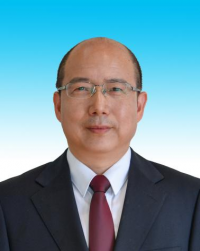
Prof. Jianqiang Du
Nanchang Normal University
Bio: Du Jianqiang is a member of the Jiusan Society. He holds a postgraduate degree and a PhD, and is a professor and PhD supervisor. He is recognised as a leading academic figure among middle-aged and young scholars in Jiangxi’s higher education institutions and has been selected for the Jiangxi New Century ‘100-1,000-10,000’ Talent Programme. He currently serves as President of Nanchang Normal University, a member of the Social Development Committee, Vice-President of the Chinese Society of Information on Traditional Chinese Medicine, and Chairman of the Jiangxi Computer Society.
In July 1992, he graduated from the Department of Precision Instruments and Mechanical Engineering at Tsinghua University, specialising in Precision Instruments; In July 1995, he graduated from the Department of Mechanical Engineering, School of Mechanical Engineering I, Huazhong University of Science and Technology (formerly Huazhong University of Science and Technology), specialising in Mechanical Engineering; From July 1995 to December 2004, he worked successively at Zhuhai Sitong Computer Typesetting System Development Co., Ltd. in Guangdong, Jiangxi Kehuan Computer Co., Ltd., and Jiangxi Nanchang Jinding Software Development Co., Ltd., holding positions ranging from Engineer to Chief Engineer; From December 2004, he served successively as a lecturer, Head of the Department of Computer Science, and Dean of the School of Computer Science at Jiangxi University of Traditional Chinese Medicine (now Jiangxi University of Chinese Medicine). During this period, from September 2005 to December 2008, he pursued a PhD in Computer Software and Theory at the School of Computer Science, Huazhong University of Science and Technology, as a candidate with equivalent academic qualifications; he was appointed Professor in November 2010; From January 2017 to May 2024, he served as Vice-Chancellor of Jiangxi University of Chinese Medicine; from May 2024 to December 2024, he served as Vice-Chancellor of Nanchang University; and since December 2024, he has served as President of Nanchang Normal University.
His research interests lie in big data and artificial intelligence, as well as natural language processing. He has led over 20 key national and provincial-level research projects, including those under the National Key Research and Development Programme and the National Natural Science Foundation of China. Three research achievements he led have been awarded the Provincial Science and Technology Progress Award, whilst his educational reform initiatives have received the Second Prize of the National Excellent Teaching Achievement Award, as well as First and Second Prizes at the provincial level. He has served as chief editor for the national planning textbooks on traditional Chinese medicine higher education for the 12th, 13th and 14th Five-Year Plans. He has published over 200 papers in leading domestic and international journals and at academic conferences, of which more than 80 have been indexed in the three major citation indexes. He holds over 20 computer software copyrights and has been granted more than 10 invention patents.

Prof. Weidong Min
Nanchang University
Professor Min joined Nanchang University in 2015, where he established the Nanchang University Metaverse Research Institute, the Jiangxi Provincial Key Laboratory of Virtual Reality, and the National Talent Workstation for Smart Energy Internet. In recent years, he has led over 20 research projects, including seven national-level projects and three projects with budgets exceeding 10 million yuan. He has published over 180 academic papers in high-impact journals such as IEEE and ACM Transactions. The average Impact Factor (IF) of his 50 representative SCI papers published as first author or sole corresponding author over the past five years is 7.757. He has received four provincial and ministerial-level science and technology awards and holds over 40 authorised invention patents. His research findings have been applied in fields such as video intelligence, the metaverse and smart cities, yielding significant economic benefits. He has supervised over 120 doctoral and master’s students, of whom more than 90 have graduated. The Virtual Reality and Metaverse Innovation Team led by him has achieved numerous theoretical and technical results of internationally advanced and, in some cases, internationally leading standards in fields such as novel adaptive deep learning, intelligent perception and natural interaction.

Prof. Duoqian Miao
Tongji University
Bio:Miao Duoquan is a Fellow of the International Rough Sets Society (IRSS) and a Fellow of the Chinese Association for Artificial Intelligence (CAAI). He is currently a Professor and PhD supervisor in the Department of Computer Science at Tongji University; Head of the Data Science and Big Data Technology programme; Chair of the Academic Affairs Committee of the Department of Computer Science; Deputy Chair of the Academic Committee and a member of the Degree Committee of the School of Electronics and Information Engineering; and Deputy Director of the Ministry of Education Key Laboratory of Embedded Systems and Service Computing. He has previously served as Head of the Department of Computer Science, Deputy Dean of the School of Electronics and Information Engineering, and Director of the National Experimental Teaching Demonstration Centre for Computer and Information Technology.
His primary research areas include artificial intelligence, machine learning, big data analysis, text and image understanding, and granularity computing, covering topics such as object detection, natural language processing, intelligent video analysis, multi-granularity modelling, and uncertainty analysis. He has published over 180 SCI-indexed papers in leading domestic and international academic journals and conferences, including four ESI Highly Cited Papers. He has authored 12 textbooks and academic monographs and holds over 20 authorised patents. He has led and completed six projects funded by the National Natural Science Foundation of China, and is currently leading one project under the National Key Research and Development Programme and two projects funded by the National Natural Science Foundation of China.
He has been awarded the First Prize in Natural Sciences of Chongqing Municipality (2010) and the Second Prize in Natural Sciences of the Wu Wenjun Artificial Intelligence Award from the Chinese Association for Artificial Intelligence (2018). He has also received the Second Prize in National Teaching Achievement (2010), the First Prize in Shanghai Teaching Achievement (2009), and the Special Prize in Tongji University Teaching Achievement (2008, 2020). The course ‘Principles and Technologies of Artificial Intelligence’ was selected as a National First-Class Course (2020), whilst ‘Artificial Intelligence’ and ‘Chinese Information Processing’ were designated as Shanghai Model Courses (2017, 2013). He has received the Ministry of Education–IBM China Outstanding Teacher Award (2010), the Baosteel Education Outstanding Teacher Award (2011), and the Tongji University Outstanding Teacher Award for Moral Education and Talent Development (2017).
Currently serves as President of the International Rough Sets Society; Expert on the Review Panel of the Information Sciences Division of the National Natural Science Foundation of China; Executive Council Member of the Chinese Association for Artificial Intelligence and Chair of the Specialised Committee on Granular Computing and Knowledge Discovery; Vice-President of the Shanghai Association for Artificial Intelligence; Vice-President of the Shanghai Computer Society; Expert on the Review Panel for Computer Science of the Shanghai Academic Degrees Committee; and Deputy Director of the Shanghai Teaching Guidance Committee for Computer Science and Technology.
He currently serves as Associate Editor (AE) for the international SCI-indexed journal *Information Sciences*, as well as Associate Editor for *International Journal of Approximate Reasoning* and *CAAI Transactions on Intelligence Technology*; he is also a member of the editorial board for the domestic journal *Computer Research and Development*, amongst other roles.

Assoc. Prof. Chuan Luo
Sichuan University
Bio: Dr. Chuan Luo is currently an Associate Professor with the School of Artificial Intelligence, Sichuan University, Chengdu, China. He received the Ph.D. degree in Computer Science from Southwest Jiaotong University, Chengdu, China, in 2015. He was a Visiting Ph.D. Student with the University of Regina, Regina, SK, Canada, in 2014. In Feb. 2019, he was a Visiting Scholar with the Harvard University, Cambridge, MA, USA. His current research interests include granular computing, cloud computing, and incremental learning. He won the Natural Science Prize (2nd Grade), awarded by the Ministry of Education of China (2021). He is the recipient of two Best Paper Awards at the 12th International FLINS Conference on Uncertainty Modeling in Knowledge Engineering and Decision Making (FLINS’16), and the 2012 Joint Rough Set Symposium (JRS’12), a Workshop Best Paper Award at the 2019 IEEE Cyber Science and Technology Congress (CyberSciTech’19), and two Best student Paper Awards at the 2015 International Joint Conference on Rough Sets (IJCRS’15) , and the Joint Conference of 13th China Conference on Rough Sets and Soft Computing (CRSSC’13).
He has published more than 100 research papers in international conferences and journals, such as the IEEE TKDE, IEEE TPDS, IEEE TNNLS, IEEE TFS, Information Sciences, Information Fusion, Pattern Recognition, Knowledge-Based Systems, Expert Systems with Applications, Neurocomputing, International Journal of Approximate Reasoning, etc. He serves as an Area Editor of International Journal of Computational Intelligence Systems, Editor of Human-Centric Intelligent Systems, CCF Cultural Ambassador, and a Member of Special Committee of CAAI Granular Computing and Knowledge Discovery. He has served as Program Co-Chair of ICAIP 2021-2022、BDML2020-2021, FCST 2016, Session Chair of PAKDD 2022, IEEE DSInS 2021, IEEE CyberSciTech 2019-22021, CRSSC 2014, Web Chair of CCF BigData 2022, etc.